2/22/2020

The Year of Less: Audiobook Review


Full title: The Year of Less: How I Stopped Shopping, Gave Away My Belongings, and Discovered Life Is Worth More Than Anything You Can Buy in a Store

Dork score: 7/10

This was a last-minute selection as I was heading out the door on my way to work. I was initially disappointed because the title is misleading. People have given this book a terrible review because of this. I gave it the benefit of the doubt and listened to the whole thing.

This book is a memoir with tidbits of financial advice sprinkled in. She does actually provide a list of things you should do at the very end of the book - most of which I agree with.

I was expecting the book to go into more detail on how she saves money. She conducted an experiment called, 'the shopping ban'. Instead, she spent the majority of the book talking about herself - her lovelife, friendships, etc. It wasn't a bad book. There are some very good pieces of advice if you don't mind sitting through all the fluff. I treated it mostly as background noise during my long drives to work, but paid close attention when she started talking about methods to reduce spending.

Her blog/website likely has more financial advice and is located here: https://caitflanders.com/.

1/26/2020

The Credit Card Juggle

I have several credit cards. This may sound bad or irresponsible to some, but hear me out.

I don't use the cards to buy things I don't need. And, I actually make money by using them. I'm not talking pennies. I'm talking enough per month to pay a utility bill or two.

Also, most importantly, I pay my full balance off every month to avoid interest charges as this would completely defeat the purpose of saving $. To make things easier, set up automatic payments so you don't forget.

Believe it or not, if you are using cash or debit card (or a credit card w/ no rewards), you are actually losing money - compared with those who have reward credit cards. Check out this video that offers a good explanation: https://www.youtube.com/watch?v=ySH5SudRwak&feature=youtu.be

Here's my current credit card list:
Citi Double Cash (Citi Bank) - 2% cash back on anything
Discover It (Discover) - 5% cash back on rotating categories
Chase Freedom (Chase) - 5% cash back on rotating categories
Bank of America Cash Rewards (BoA) - 3% cash back on category of your choice
Amazon Prime (Chase) - 5% cash back on certain Prime purchases as well as Whole Foods

My most often used card is the Citi double cash - simply because you get 2% back on everything. This means you can use this card to pay for your car insurance and get cash back from it!

Next most used are either the Chase Freedom or Discover It, depending on the categories. The categories change quarterly, so you'll need to pay attention. Often as at least one of them is gas and sometimes groceries. 5% back on gas and groceries. Not bad, eh?

The BoA card is used when the rotating category cards don't offer 5% back on big expenses like gas or groceries. So when this happens you manually change the category of your BoA card (can be done once per month). 3% isn't too shabby.

I recently got rid of Amazon Prime, so I no longer get the 5% (I instead get 3%), so I don't use this card much anymore. But if you have Prime, it's a no-brainer.

Many of these cards also offer a sign-up bonus (typically $200), so that's nice too.

Happy juggling!

P.s. this is a continuation of https://muse-parade.blogspot.com/2019/03/how-i-save.html

Useful links:
https://www.reddit.com/r/personalfinance

12/14/2019

The War on Normal People: Audiobook Review

Dork score: 7.5/10

Subtitle: "The Truth About America's Disappearing Jobs and Why Universal Basic Income Is Our Future"

I was initially turned off by the main title of this book. I'm still not sure if I like it. "Normal people". What is that supposed to mean? Am I normal? Does he mean, the middle class? He probably could have chosen a better title.

Andrew often promotes his love for Math and often wears a baseball cap emblazoned with the word, 'MATH'. While this wasn't initially meant to be an acronym, like 'MAGA' - he later said it could mean, 'Make America Think Harder'. I like this, but it creates a bit of a juxtaposition between his argument for universal basic income (UBI) and the MATH acronym. Why do people need to think harder when they get paid $1000 per month for just existing?

This reverence for math is what lead to the use of the term, 'normal' as in a normal statistical distribution. But, it still doesn't really make sense as all people would exist on the normal curve (including outliers). See graph below. After having finished the book, 'normal' means typical. 'Normal' people are folks who are unable to find work after their job is automated. 'Normal' people are folks who don't have the ability, drive, or time to obtain new skills in order to change careers once their current job is automated..

His main pitch is for universal basic income (UBI). He paints a dark picture for our future of automation. Machines will take over our jobs and we'll be left unemployed. He talks a lot about truck drivers in the book as there are many of them. Say you're a truck driver and have been for 20 years. This is all you know. You don't have any other skills. What happens you're replaced by a self-driving truck? What do you do? Go back to school?

Some of Andrew's points seem contradictory. He says people won't stop working if they have UBI, but at the same time people won't be able to find work because they only know how to do one thing.

I think eventually we'll end up in a situation similar to the humans in the movie, 'WALL-E'. This is a future where all human needs are automated which completely eliminates the need for them to work. I just hope we don't all become overweight blobs with bone density close to zero (as depicted in the movie).
The future of automation according the movie, Wall-E:
https://www.youtube.com/watch?v=_xToQ4cIHkk

While $1000/month for everyone in America sounds nice, I don't think it's the solution. Besides, why would you give a millionaire $1000/month? I'm not convinced this won't make people lazy. I think Andrew underestimates human laziness. I think that money would be better spent on programs that help them learn new skills.

Kudos to Andrew for narrating this audiobook, but 'twas a bit robotic.


Source:
https://en.wikipedia.org/wiki/Normal_distribution

https://www.nhpr.org/post/2020-candidate-conversation-andrew-yang#stream/0

11/05/2019

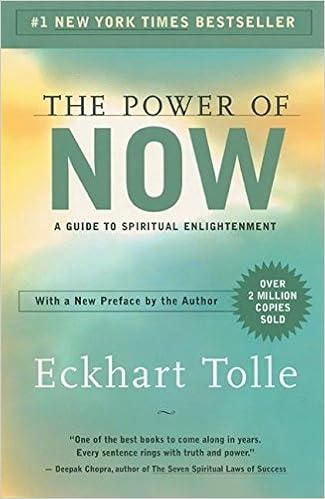
The Power of Now: Audiobook Review

Dork score: 8.5/10

What time is it? It is now-o'clock. Now is all we have. Now is all that matters. Now is where you'll find your balance. Now is when and where you will find your answers.

This book is about more than the timeless now. It's about being.It's about the distinction between you 'the watcher' and your physical 'pain body'.

One thing I like about Eckhart is that he often reminds the reader that words are just a human device in an effort to communicate ideas or feelings. Sometimes words mean different things to different people. This includes words like, 'God' or 'spirit'. He'll often use words in an unconventional way, so you'll need to keep this in mind as the book progresses. As in the book's subtitle, 'a guide to spiritual enlightenment', the word 'spiritual' likely means something different to Eckhart than it means to many people.

 In some reviews of this book, you'll often see the term, 'mumbo jumbo'. For the first chapter or so, this was my first impression - mostly due to my skeptical nature. Eckhart's voice also threw me for a loop. I had never heard him speak before. He narrates the whole audio book. He does sound a bit odd at first, but you get used to it. He speaks slowly like you would expect a spiritual teacher to speak. There's even a audible chime between chapters in the audiobook.

I identify what a lot of what Eckhart says while some passages either I didn't wholly agree with or didn't quite understand. It may deserve another read-through.

He presents a straightforward path to enlightenment. It's not something you need to search for or work a lifetime to achieve. You just need to be. Exist in the now. Be present. Become conscious and avoid being ruled by your thoughts. It's simple and elegant, but I don't know if it's pathway for everyone. It also seems to be a self-centered approach. We all  have different life experiences from Eckhart. Many people may be able to identify with him and his thoughts, but many people may not. He does make it sound like this enlightenment is achievable  by anyone if you follow his steps. This is part of the reason my score of the book isn't higher. Perhaps I'll find some of the answers in his other works.

I like his sentiment, 'you are not your mind'. Most (if not all) suffering exists in the mind. Separate (or differentiate) from your mind and you can avoid suffering. Your mind is a powerful thing. It can also be a dangerous, self-harming device if you allow it. I agree with Eckhart that you need to treat your mind as a tool. Your mind is part of you, but you aren't your mind. Thoughts often flow like a leaky faucet. Or perhaps a waterfall that you can't stop. If you can't stop the thoughts, weather they are positive or negative, you can at least observe them as an objective third-person.

“I have lived with many Zen masters, all of them cats.” - Eckhart Tolle

Another thing that bothers me about supposed 'zen masters' is that they claim the ability to judge the level of enlightenment of others. While I like the quote above about cats, how does he know cats aren't actually suffering from mental illness?  Most cats look content just being, but how do we know?

Eckhart seems like a humble person. He does speak with conviction, which I'm sure a lot of people like. After all how could you believe someone if they don't seem confident in what they are saying? However, there are some claims which I feel are matters of opinion and should not be treated as fact. I would like Eckhart more if he didn't make such bold claims.

With that said, I highly recommend this book to anyone. Read/listen to it with an open mind. Give it a chance. During the first chapter, if you've never heard of E. Tolle before, you may think it's a gimmick. Read a few chapters before making that judgment. Think about what is being said, but don't think too much. As Eckhart explains - don't think, feel. Like anything, you don't need to agree with it all to gain from it. This was time well spent. It forces you into a self-meditation. It's a habit I already had before reading this, but especially after having read it, I recenter myself whenever I feel overwhelmed or flooded with negative thought.


Wiki: https://en.wikipedia.org/wiki/Eckhart_Tolle

Website: https://www.eckharttolle.com/

9/26/2019

The Girl With The White Flag: Book Review

Dork score: 10/10

What an emotional roller coaster..... Indelible; this is one of the very few books to  bring tears to my eyes. Do you think you've had it rough as a kid? Think again.

Tomiko at age 7, for several weeks - dodged bullets and explosives, avoided being murdered by a crazed military person of the same nationality, woke up to her dead brother after spending a night in the mud with the hell of war surrounding her. By some miracle and a headstrong determination, she survived.


Tomiko traveled from Naha (her home) to Komesu and made a bunch of circular patterns because of a mixture of getting lost and running away from violence. Map only shows direct route.


This is a small, yet devastating glimpse into the horrors of war. Surprisingly (to me), at the time Tomiko came out of hiding with the white sheet on stick, there were still several more months of WWII before the official end. See rough timeline below.

I was particularly interested in Tomiko's descriptions of how Japanese locals viewed Americans. They were fed propaganda and lead to believe Americans were brutish,  evil, thugs. When she encountered US forces, she's surprised to see just the opposite.

World War II - Relative Timeline

1941 Dec 7th - Japan attack on Pearl Harbor

1945 April 1st - Battle for Okinawa starts

1945  May - Tomiko left home to travel south w/ sisters and brother after bombs start falling and father goes missing

1945 June (early) - Tomiko loses her siblings (brother killed). Attempts to find refuge, but gets lost and circles around heading into the battles by mistake.

1945 June 25th - Tomiko brings stick w/ white cloth out to US troops to signify peace. US photographer captures famous shot of Tomiko which became the book cover.

1945 August 6th/9th - atomic bomb on Hiroshima / atomic bomb on Nagasaki

Sources:
https://www.pbs.org/thewar/at_war_timeline_1945.htm
https://liuchiuan.com/2015/04/07/the-romantic-view-of-okinawans-as-pacifists/
https://ihatov.wordpress.com/tag/tomiko-higa/
https://www.theatlantic.com/photo/2011/10/world-war-ii-the-fall-of-imperial-japan/100175/

Related Japanese media:

Grave of the Fireflies
https://www.rottentomatoes.com/m/grave_of_the_fireflies (WWII firebombing of Kobe, Japan)

In This Corner of the World
https://www.rottentomatoes.com/m/in_this_corner_of_the_world (WWII bombing of Hiroshima/  Kure, Japan)

8/11/2019

The Hate U Give: Audiobook Review

Dork score: 9.5/10

Bravo, Angie Thomas! Gripping, insightful, honest. Well done.

In case you were wondering why 'U' was used instead of 'YOU', in the title, it's because it's comes from the acronym 'THUG', which is borrowed from a hip hop group called, Thug Life. One of the members, Tupac Shakur popularized the the full acronym: The Hate U Give Little Infants Fucks Everyone, which is the group's name. You can't deny how true this statement is.

THUG (book) is a fiction, but I didn't learn this until I was finished with it. With all of the unnecessary police brutality going on in the world, this could have very well been a true story. What happens in the book has happened and continues to happen in today's crazy world.

This book covers many hot topics: racism, police brutality, gang wars, poverty, drug dealing, society's skewed opinion in reaction social media and other news media, activism, protests, interracial couples. This all stems from a major event at the beginning of the book: a shooting of an innocent black youth by a white cop. You really need to think about the root cause and Angie does a great job of taking us on a journey as she explains the root cause through the main character's experience and conversations throughout the book.

There is a powerful conversation about midway through the book between the main character Starr and her father about why people (in their neighborhood Garden Heights) sell drugs. This may not be the reason everyone sells drugs, but in their hometown, they are left with no other choice. From birth, through childhood, some people are put in horrific situations where they either follow the orders of a gang leader, or risk getting killed. How do you prevent this? What's the root cause? The answer is, Hate. But, how do you stop the hate?

Hate, prejudice, racism, greed. These are somehow embedded in the human race since they have been prevalent for so long, but I feel a lot of it is taught.  You compound these factors and you create neighborhoods like Garden Heights. The saying, 'nip it in the bud' comes to mind here - the 'bud' being the root cause. This is where change needs to happen. If much of hate is taught, there's hope. Even if hate is naturally developed, if people communicate, share stories, imagine yourself in someone else's shoes, there's hope.

Don't make assumptions and judge until you know the full story. Regardless of skin color, background, upbringing, education - we're all human. We all deserve each other's respect and benefit of the doubt. We live in a complicated world. Communication and understanding each other is sometimes difficult, but I promise the effort is worth it. This is how we eliminate the hate.

Wikipedia article link: The Hate U Give
Audiobook narration by Bahni Turpin (Amazing performance here! Highly recommend the audiobook)


6/15/2019

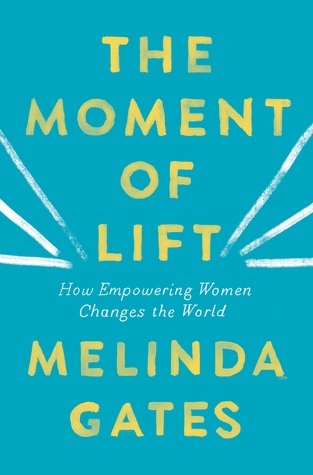
The Moment of Lift: Audiobook Review


'How empowering women changes the world'

Dork score: 9/10

Bravo, Melinda Gates! This was a very well-written, honest, and concise book. It's part memoir and set of short stories.

I especially enjoyed the chapter where Melinda described her own personal struggles of equality in her own marriage with Bill and the struggles and unfairness of unpaid work. She convinced Bill to drive the kids to school more often and he did. And then more dads started following suite.

Old habits die hard. Gender equality won't happen overnight. You need to take responsibility and set the standard, starting in your own household.

I am committed to the lift by continuing to support my wife in her career ambitions and taking on my share of unpaid work in the household.

Bill & Melinda Gates Foundation:
https://www.gatesfoundation.org/

Melinda Gates TED talk:
https://www.ted.com/talks/melinda_gates_let_s_put_birth_control_back_on_the_agenda#t-72199

Commiting to the lift:
https://www.evoke.org/articles/may-2019/Impatience/Fresh_Takes/heres-how-you-committed-to-lifting-up-women?utm_source=TW&utm_medium=MG_OG&utm_campaign=EV_MAY&utm_content=61419_POST_CL_TW&linkId=69023206

Moving

 Trying out a different platform: https://museparade.wordpress.com/